
Winter on UK roads: Why HGV fleets should be extra vigilant

As the days draw shorter and the weather turns harsher, the winter season brings new challenges that HGV drivers and fleet managers must face. Storms, icy roads and surfaces, heavy rain and strong winds all demand extra caution whilst driving. According to the FORS Winter Driving Guide, winter driving calls for 3 measures: planning, preparation and readiness.

Furthermore, a Driving for Better Business Weather Conditions article warns that poor weather increases the risk for serious collisions.

For fleets operating HGVs, it is important to treat winter not as an inconvenience, but as a hazard that requires extra precautions to stay safe on the roads, avoiding serious collisions.

Common winter hazards:

Ice, snow and black ice

  • When roads are icy or snow-covered, stopping distances can increase up to ten times compared to normal conditions. Harsh braking, quick steering or abrupt acceleration can easily sway a vehicle off the roads.
  • Black ice may not be visible, therefore it’s important to treat any seemingly wet surface with particular caution, specifically on bridges, dips, shaded areas or bends.
  • Before setting out, ensure your vehicles tyre treads are healthy (3 mm for good grip), all fluids (coolant, washer fluid, antifreeze) are topped up and brakes, wipers, lights and mirrors are functional, ensuring any snow or ice is removed from the vehicle.

Rain, flooding and aquaplaning

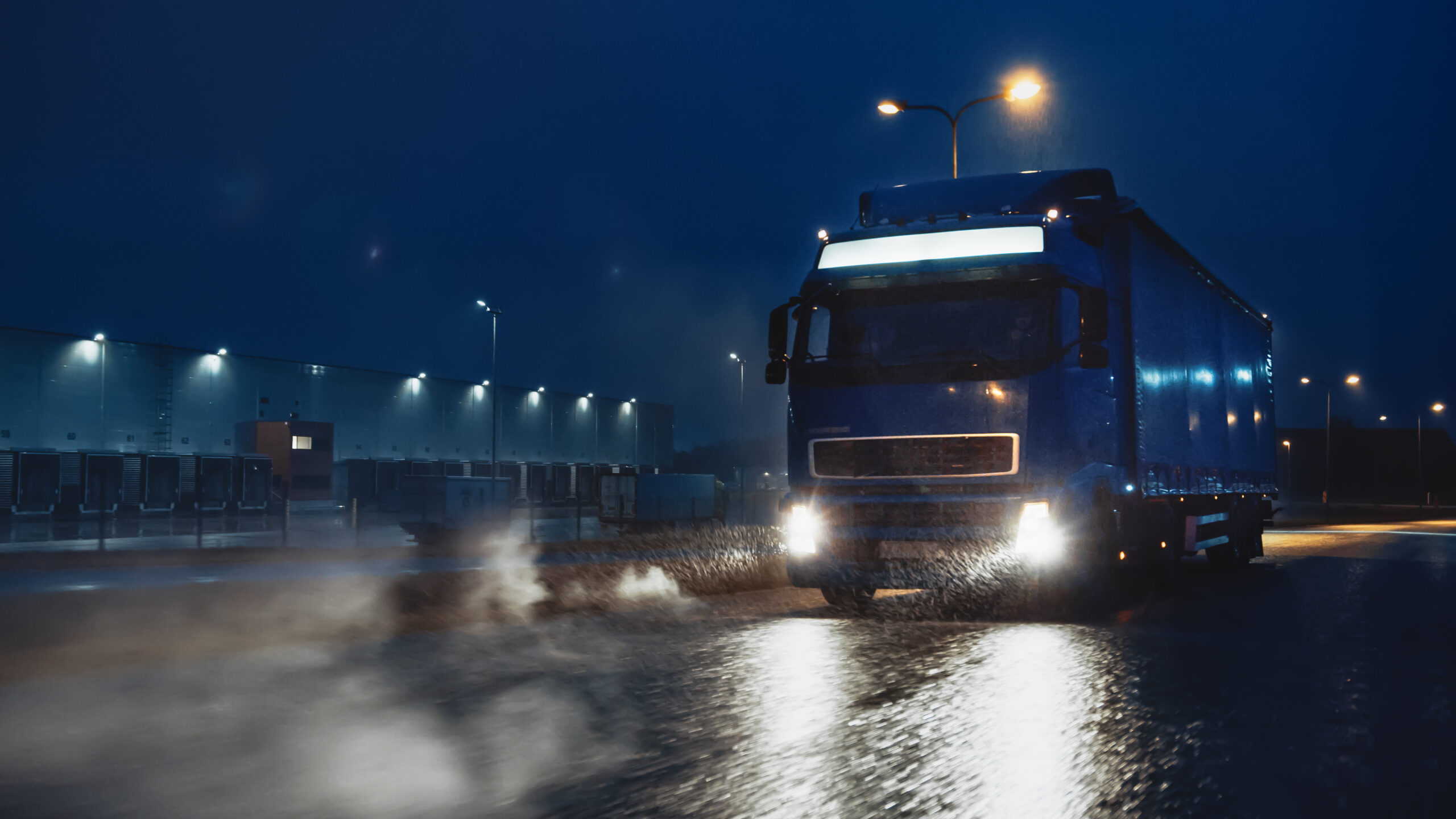
  • Heavy rain can severely reduce visibility, doubling braking distance. Tyres can lose grip and aquaplaning becomes a serious hazard.
  • If you encounter pools of water, it’s usually safer to avoid it. If you must pass through shallow water, go slowly (1- 2 mph) using the centre of the road (where it's slightly raised) and gently dry the brakes afterwards.

Strong winds and storms

  • High-sided vehicles, particularly unladen trailers or curtain siders are especially vulnerable to gusts of wind. Bridges, exposed roads and open stretches can become dangerous.
  • In windy conditions, if a trailer is empty, make sure curtains are tied securely and avoid high bridges or open exposed roads if possible.

Poor visibility, long nights and fatigue

  • During winter, the days are shorter which means less daylight, long hours in the dark, and commonly drivers encounter fog or spray from other vehicles, causing worse visibility.
  • Journeys should be carefully planned, with routes checked in advance, rest stops scheduled and more time within the journey, leaving space for slower driving, time for de-icing your vehicle and unexpected delays.

Why cameras and Video Telematics are useful during winter road conditions?

Operating fleets during winter conditions should keep in mind evidence and situational awareness.

  • Improved visibility: With cameras mounted on the vehicle the driver gets a clear, real-time view of what’s happening around the HGV. This is specifically important in weather conditions such as: heavy rain, spray, fog or low light. The visibility around the vehicle assists the driver with anticipating potential hazards, allowing them to react in time, avoiding situations such as collisions.
  •  
  • Incident documentation: In the event of skidding, aquaplaning, sudden braking or collisions, all common occurrences in icy or stormy weather, the recorded footage from cameras allows clear evidence, helping to protect drivers and fleet operators.
  •  
  • Driver behaviour: Telematics data helps fleet managers monitor driver speed, braking and cornering. The footage and telematics data available, allows for positive reinforcement in training, with use of real evidence which can be used for training purposes, reinforcing safer behaviours.
  •  
  • Risk-aware planning: Using data and video history, fleets can plan routes that avoid high-risk roads (untreated rural lanes, exposed bridges, flood-prone areas, low bridges), adjust schedules to daylight hours, or delay non-essential journeys when storms or warnings are in force.
  •  

Winter weather and road conditions shouldn’t be underestimated, especially for fleets operating with HGV’s. The combination of ice, rain, wind and darkness means that each journey becomes more hazardous and should take extra precautions.

Proper planning and preparation, driving with care along with using reliable tools like cameras and video telematics can significantly reduce risk, protecting drivers, cargo and other road users like vulnerable pedestrians.
If you’d like to learn more about how VUE can support your fleet this winter, or want a demon of our systems, please do get in touch.

Find out how VUE supports fleets with its solutions by contacting us today

VUE - Your Fleet Risk Management Partner

Address

510 Metroplex,
Broadway,
Salford Quays
M50 2UE